Articles and short posts inspired by projects, people, and practical lessons. No noise, just the good stuff.
Newest idea
Computer Vision–Based Fraud Detection in International Travel: A Critical Literature Review
The rapid growth of international travel has significantly increased the complexity and scale of identity fraud at airp…
ArticleFeb 25, 2026
Computer Vision–Based Fraud Detection in International Travel: A Critical Literature Review
By Rohit Upadhyay
The rapid growth of international travel has significantly increased the complexity and scale of identity fraud at airports and border checkpoints. Traditional manual inspection methods are no longer sufficient to detect sophisticated fraud techniques such as passport forgery, b…
The rapid growth of international travel has significantly increased the complexity and scale of identity fraud at airports and border checkpoints. Traditional manual inspection methods are no longer sufficient to detect sophisticated fraud techniques such as passport forgery, biometric spoofing, and face morphing. In response, computer vision (CV) technologies powered by artificial intelligence have emerged as critical tools in modern border security systems.
This literature review examines recent research (2020–2025) on computer vision–based fraud detection in international travel. The review identifies six major themes: biometric verification and facial recognition, document forgery detection, automated border control and morph detection, anti-spoofing systems, multimodal biometrics, and real-world deployments.
Facial recognition systems based on deep learning, particularly convolutional neural networks (CNNs) and transformer-based models, have demonstrated significantly higher accuracy compared to traditional approaches (El Fadel, 2025; Amin et al., 2025). Operational systems such as SmartGate and PARAFE illustrate the real-world implementation of automated biometric verification at scale (Israel, 2020; Hidayat et al., 2024).
Beyond face recognition, computer vision techniques are increasingly used to detect forged passports and identity documents using texture, spectral, and pattern analysis (Auberson et al., 2020; Gonzalez, 2024). Additionally, morphing attacks—where facial images are digitally blended—have prompted the development of advanced detection systems using 3D modeling and Siamese neural networks (Singh et al., 2020; Soleymani et al., 2021; Venkatesh et al., 2021).
Presentation attack detection (PAD) systems further enhance security by identifying spoofing attempts involving masks, photos, or deepfakes. Multispectral and dynamic deep learning approaches have shown superior performance compared to static image analysis (Sánchez-Sánchez et al., 2020; Shaheed et al., 2023).
Despite strong technical progress, the review highlights key challenges. Many systems perform well under controlled laboratory conditions but face reliability issues in real-world environments. Algorithmic bias, demographic fairness concerns, privacy risks, and regulatory constraints remain underexplored areas. Furthermore, the literature often evaluates components in isolation rather than integrated system-level performance.
The review concludes that while computer vision-based fraud detection systems are technologically mature and operationally viable, their long-term success depends on shifting from purely accuracy-driven models to adaptive, ethical, privacy-preserving, and human-in-the-loop frameworks. Future research must integrate fairness-aware design, explainable AI, and privacy-enhancing techniques to ensure sustainable and trustworthy deployment in global border security.
References
Amin, R. K., El Khayat, G. A., El Sahn, F., & Amer, A. A. (2025). Enhancing e-banking security and personalization through convolutional neural network-based facial recognition. Journal of Computer Science and System Programming, 2323–2336.
Auberson, M., Baechler, S., Zasso, M., Genessay, T., Patiny, L., & Esseiva, P. (2020). Development of a systematic computer vision-based method to analyse and compare images of false identity documents. Forensic Science International, 259, 47–58.
El Fadel, N. (2025). Facial recognition algorithms: A systematic literature review. Journal of Imaging, 11(2), 58.
Gonzalez, B. (2024). Smart Engines developers train AI to detect all passport forgeries. Biometric Update.
Hidayat, F., et al. (2024). Face recognition for automatic border control: A systematic literature review. IEEE Access, 12, 1–19.
Israel, T. (2020). Facial recognition at a crossroads: Transformation at our borders and beyond. CIPPIC.
Sánchez-Sánchez, M. A., et al. (2020). CNN approach for multispectral facial presentation attack detection. Entropy, 22(11), 1296.
Shaheed, K., et al. (2023). Deep learning techniques for biometric security: A systematic review of presentation attack detection systems. Engineering Applications of Artificial Intelligence, 126, 107569.
Singh, J. M., et al. (2020). Robust morph-detection at automated border control gate. arXiv.
Soleymani, S., et al. (2021). Differential morphed face detection using deep Siamese networks. arXiv.
Venkatesh, S., et al. (2021). Face morphing attack generation and detection: A comprehensive survey. arXiv.
The rapid growth of international travel has significantly increased the complexity and scale of identity fraud at airports and border checkpoints. Traditional manual inspection methods are no longer sufficient to detect sophisticated fraud techniques such as passport forgery, b…
17 views
ArticleFeb 24, 2026
Autonomous Data Ecosystems: The Future of AI-Driven Pipelines
By Rohit U
In the near future, data pipelines won’t just transport information — they’ll think, adapt, and optimize themselves. What we currently manage through manual ETL workflows and orchestration tools will evolve into intelligent, AI-driven systems capable of designing, maintaining, a…
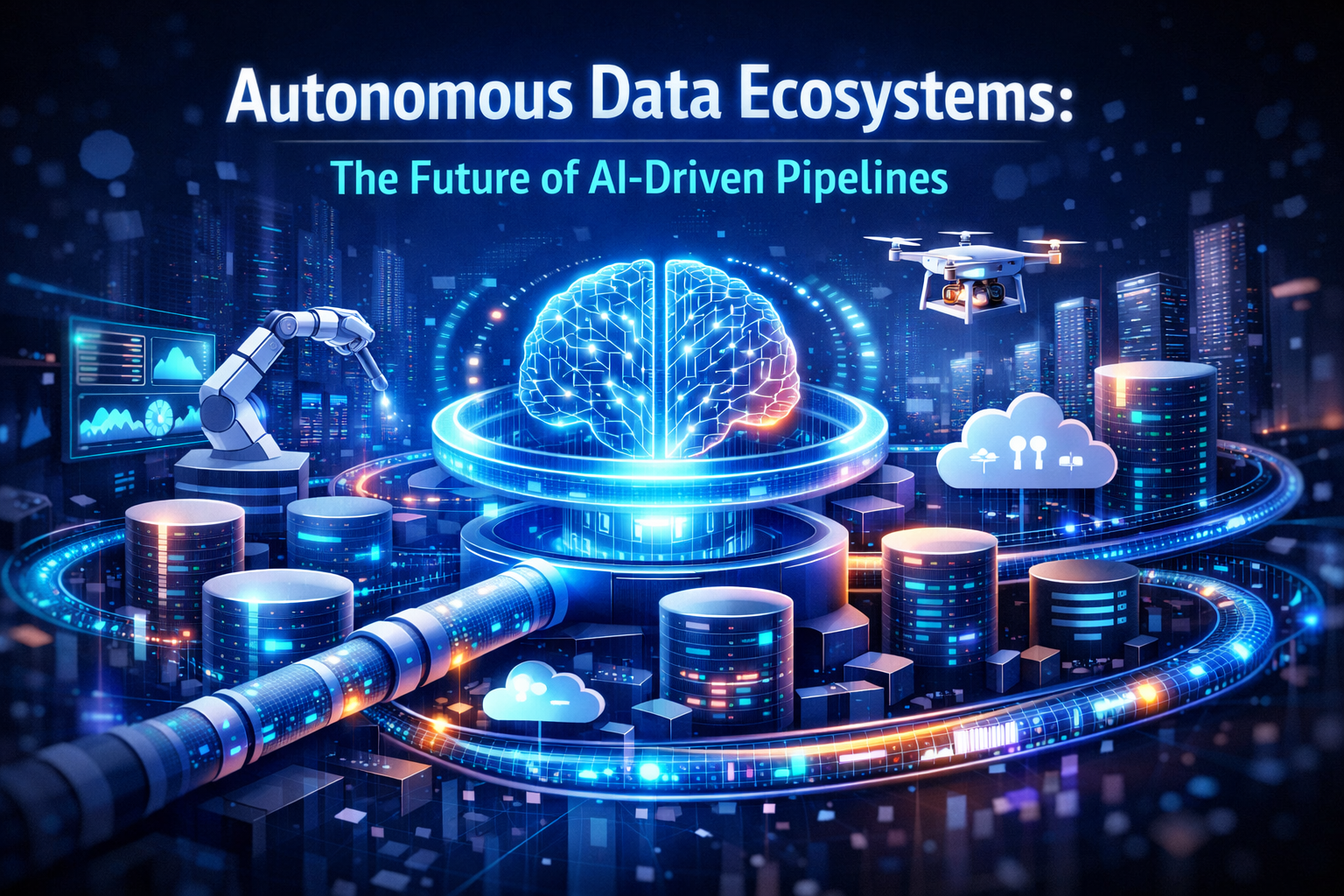
In the near future, data pipelines won’t just transport information — they’ll think, adapt, and optimize themselves. What we currently manage through manual ETL workflows and orchestration tools will evolve into intelligent, AI-driven systems capable of designing, maintaining, and improving their own architecture.
Today, data engineering still depends heavily on predefined logic. Teams build ingestion processes, write transformation scripts, monitor failures, and adjust infrastructure manually. While automation tools have helped, pipelines remain rule-based. The next generation will be context-aware. AI will automatically detect new data sources, infer schemas, classify information, and integrate it without weeks of manual configuration.
Transformation layers will also become smarter. Instead of engineers writing SQL for every business question, AI systems will translate business intent into structured workflows. A simple request like “What drives customer retention?” could trigger automated feature engineering, aggregation logic, and model-ready datasets. Natural language will increasingly become an interface for data engineering.
Optimization will happen in real time. AI-driven pipelines will dynamically allocate compute resources, manage storage tiers, and predict workload demands. Rather than reacting to failures, systems will identify anomalies early, detect schema drift, and self-correct before dashboards or reports break. Monitoring will shift from reactive alerts to predictive resilience.
Governance will be embedded directly into the pipeline. Sensitive data will be automatically tagged, compliance policies enforced dynamically, and lineage tracked transparently. As regulations evolve, intelligent systems will adapt without requiring large-scale reengineering.
Even with this autonomy, humans won’t be replaced — their role will evolve. Engineers will define guardrails, oversee AI decisions, and focus on strategic architecture instead of repetitive maintenance. The relationship between humans and data systems will become collaborative rather than operational.
AI-driven pipelines represent a shift from automation to autonomy. Data infrastructure will no longer be static plumbing behind the scenes. It will function as the central nervous system of digital enterprises — continuously learning, optimizing, and enabling faster, smarter decisions.
The future of data isn’t just automated. It’s autonomous.
In the near future, data pipelines won’t just transport information — they’ll think, adapt, and optimize themselves. What we currently manage through manual ETL workflows and orchestration tools will evolve into intelligent, AI-driven systems capable of designing, maintaining, a…
22 views
ArticleFeb 24, 2026
How AI Is Reshaping Digital Presence, Web Development & Lead Generation
By Jane Robertson K · Contributors: Merry J, Coleman P S
Artificial Intelligence is no longer a future trend — it is actively reshaping how real-world businesses operate online. From small local companies to global brands, AI is transforming digital presence from something static into something intelligent, adaptive, and revenue-drive…
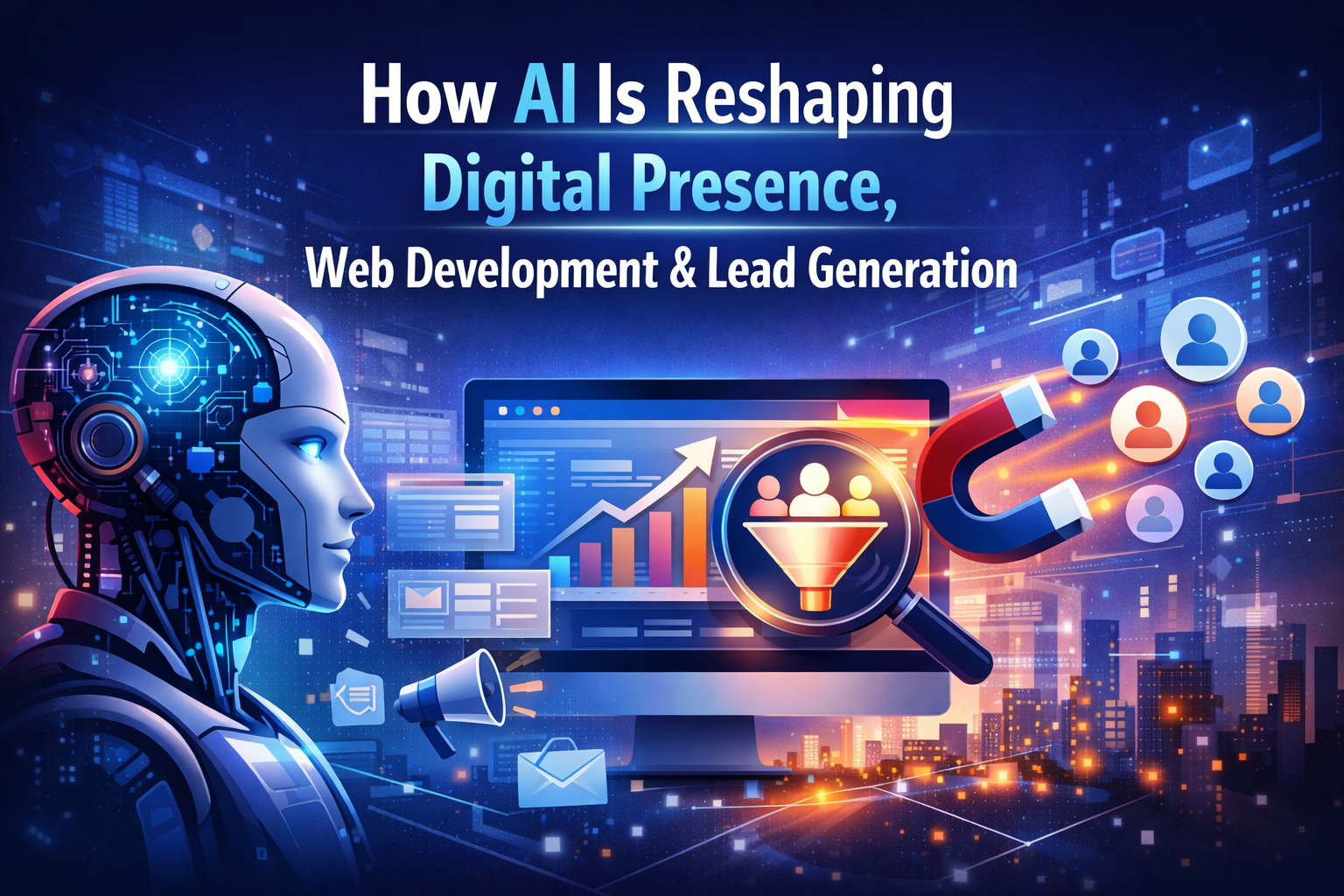
Artificial Intelligence is no longer a future trend — it is actively reshaping how real-world businesses operate online. From small local companies to global brands, AI is transforming digital presence from something static into something intelligent, adaptive, and revenue-driven.
Digital Presence Is Becoming Personalized
In the past, a website was simply a digital brochure. Everyone saw the same content, layout, and message. Today, AI enables websites to adjust dynamically based on user behavior, location, and interests.
Platforms like Amazon and Netflix have long used personalization to drive engagement. Now, similar AI capabilities are accessible to everyday businesses. Websites can recommend products, adapt messaging, and guide users toward conversion more intelligently than ever before.
The result? Higher engagement and better conversion rates.
Web Development Is Faster and Smarter
AI-assisted development tools help teams generate code, identify bugs, and optimize performance. What once required months of development can now be achieved in weeks.
More importantly, AI allows websites to continuously improve. By analyzing click behavior, scroll depth, and user journeys, businesses can refine layouts and calls-to-action based on real data — not guesswork.
Websites are no longer “launch and leave.” They are “launch and evolve.”
SEO and Search Are Changing
Search engines, led by companies like Google, now prioritize search intent and content relevance over simple keywords. AI tools help businesses identify content gaps, build topic clusters, and optimize for semantic search.
This means modern SEO is about delivering meaningful value, not just ranking tricks.
Lead Generation Is Becoming Predictive
AI is especially powerful in lead generation.
It can score leads automatically, prioritize high-intent prospects, and power intelligent chatbots that qualify visitors in real time. CRM platforms such as HubSpot and Salesforce now embed AI directly into sales pipelines to streamline conversions.
Advertising platforms like Meta and Google Ads also use AI to optimize targeting and bidding automatically, reducing cost per lead.
The Bigger Picture
AI is leveling the playing field. Small and medium businesses now have access to tools that were once exclusive to large enterprises.
However, AI works best when combined with human strategy. Automation can improve efficiency, but brand voice, creativity, and trust still require human insight.
In the coming years, businesses won’t just have websites — they will have adaptive digital systems that learn and optimize continuously.
The question is no longer whether AI will impact business.
It already has.
The real question is how effectively businesses choose to use it.
Artificial Intelligence is no longer a future trend — it is actively reshaping how real-world businesses operate online. From small local companies to global brands, AI is transforming digital presence from something static into something intelligent, adaptive, and revenue-drive…